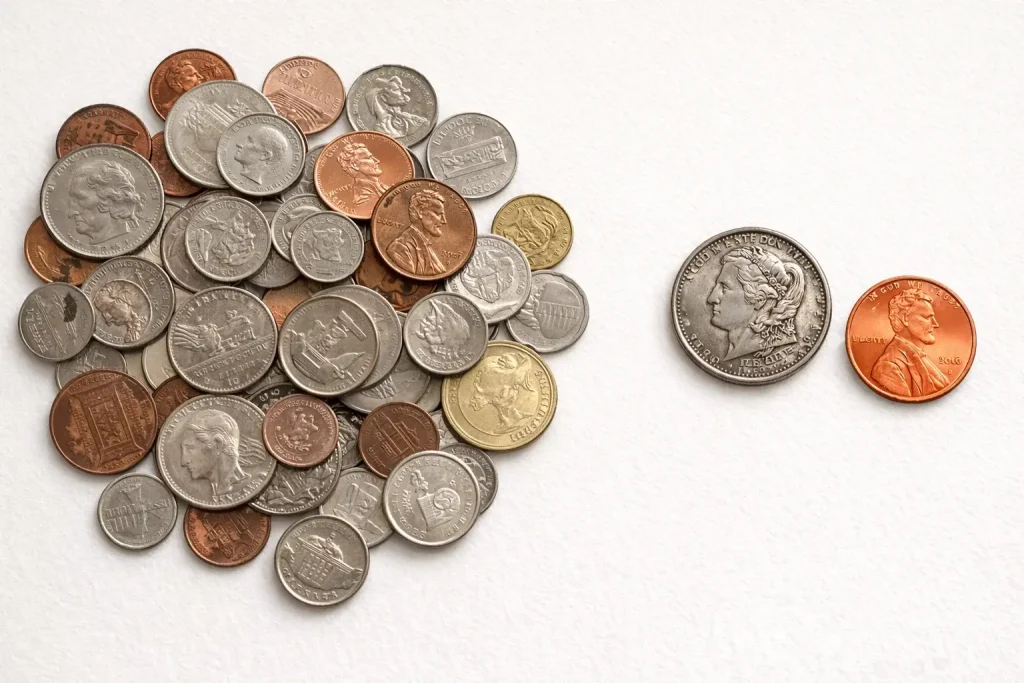
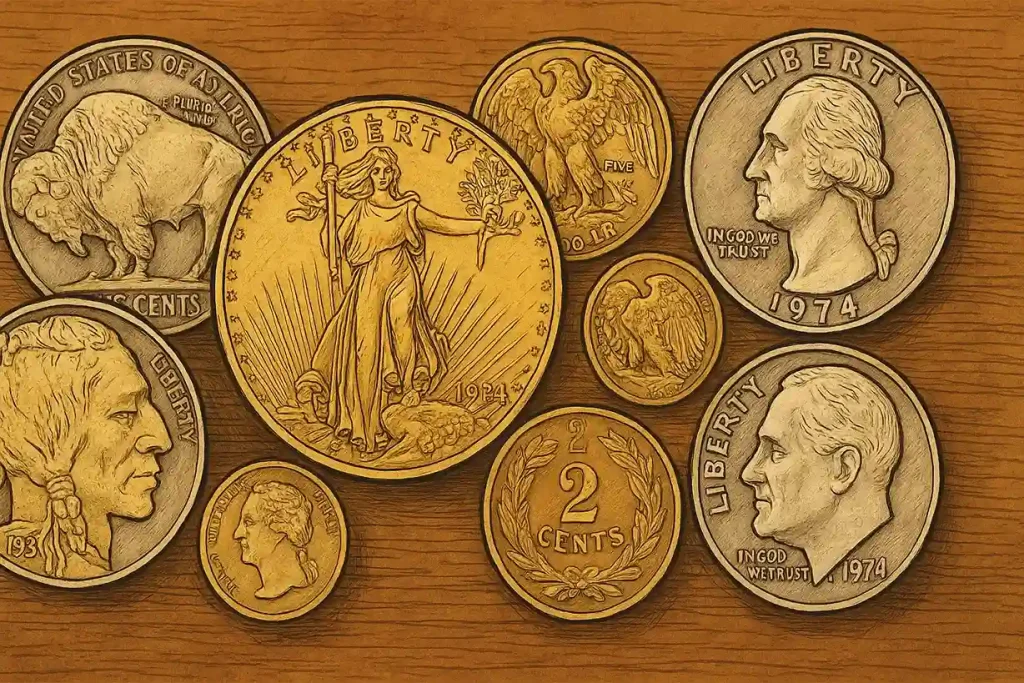
How to identify rare coins in your pocket change starts with one simple idea: most coins in change are ordinary, but a small part deserves a second look.
A coin value checker app can speed up that first pass. It can help you separate common pieces from coins that may need closer study. It cannot replace grading, attribution, or market research. It can save time.
Collectors still search for pocket change for a reason. Silver coins still turn up from time to time. Better dates, proof pieces in circulation, and clear mint errors can also appear. Most finds will not be rare. The useful habit is not guessing value from age or color. The useful habit is filtering fast and checking the right details.
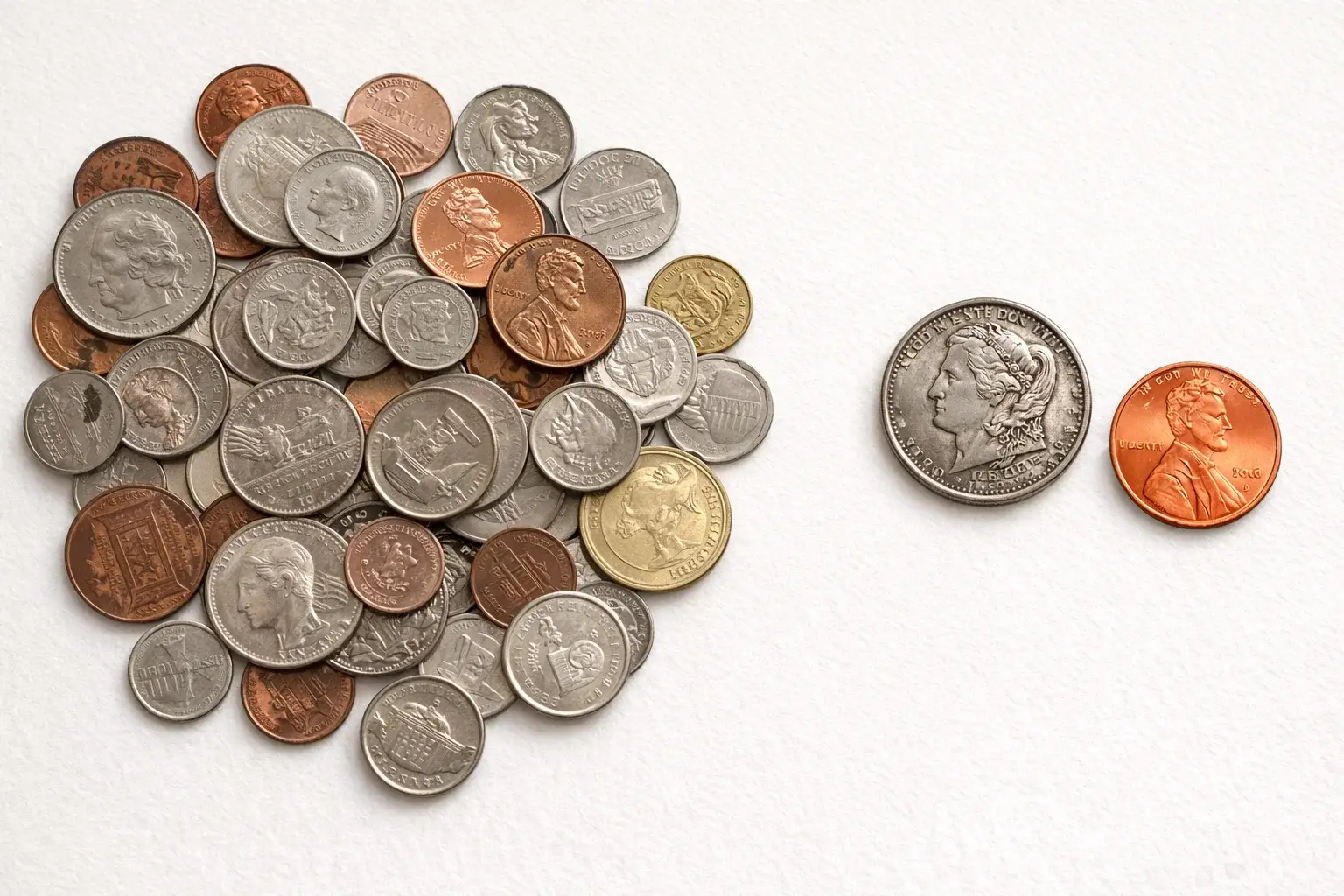
What an App Can Do Well
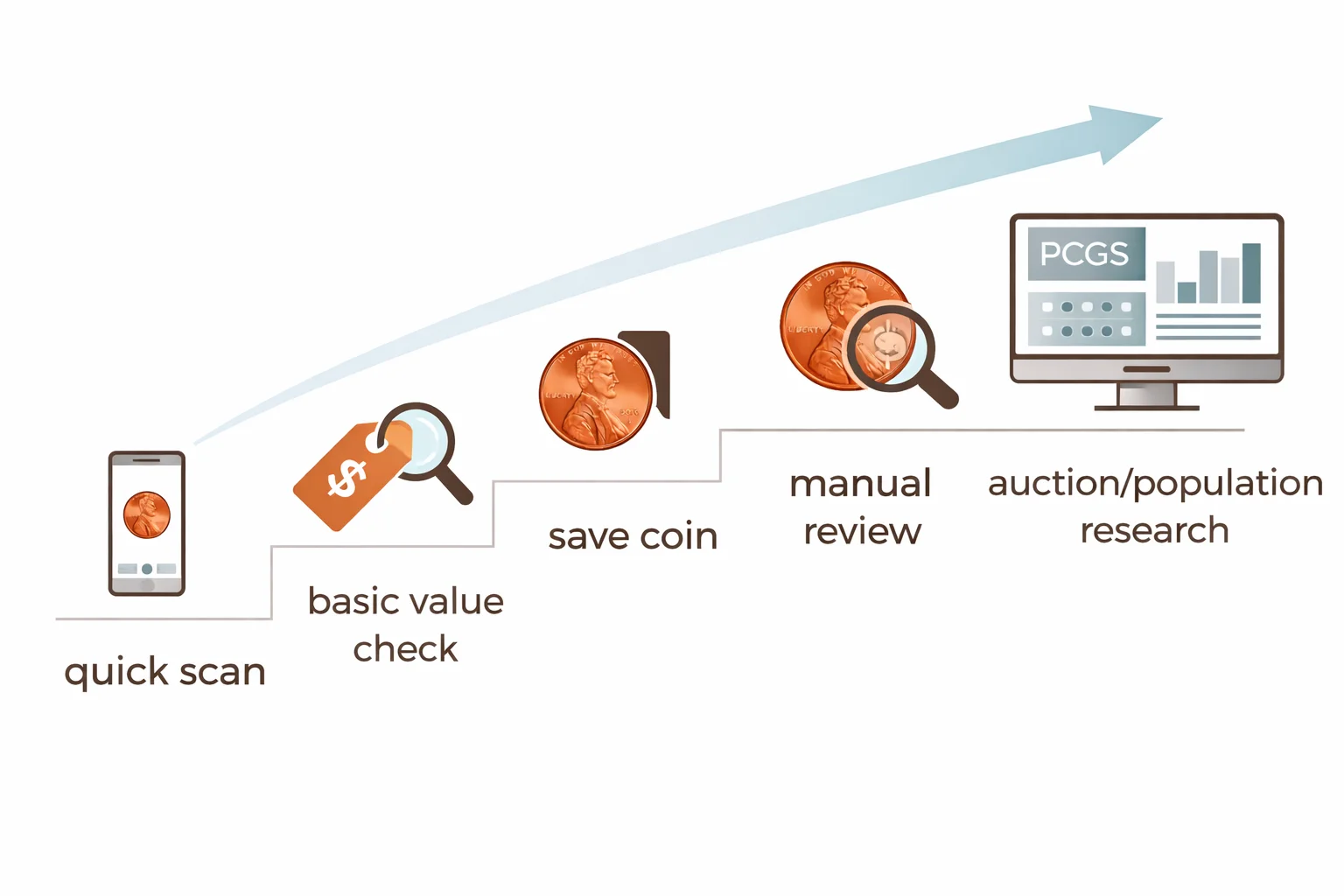
A good app helps with the first screen. That usually means four things:
- Identify the coin from a photo
- Show the basic type and country
- Give a rough value range or price guide link
- Save the coin for later review
That is enough for everyday sorting. It is useful for mixed change, travel finds, and small bankroll searches. It is less useful for hard cases like subtle doubled dies, cleaned surfaces, or top-grade pricing. Those still need manual review and stronger reference work.
What an App Cannot Do on Its Own
This matters just as much.
An app cannot guarantee rarity. It cannot confirm every error. It cannot settle the final market price by itself. Even a strong result is still a lead, not a verdict. That is why serious collectors still check surfaces, strike, mint mark, and sold-market data after the first scan. PCGS CoinFacts makes this clear by centering its value around price guide data, auction prices realized, images, and population tools, not just a camera result.
How Apps Were Judged
This list is built around pocket change use, not general marketing claims. The key questions are practical.
What matters most
- Speed of first identification
- Usefulness of the data after the scan
- Help with value checking
- Storage and sorting tools
- Relevance for real pocket change finds
That framework changes the ranking. An app may look impressive on paper but still feel slow, shallow, or too narrow when sorting mixed coins from daily change. An app built for clear first-pass work usually does better here. This ranking is an editorial judgment based on the features each app publicly highlights.
Coin ID Scanner
This is the most balanced option in the group for pocket change work. The official site highlights instant photo identification, coin value checking, collection management, a database of 150,000+ coins, and 98% detection accuracy. Other current pages on the same site also highlight smart filters and AI helper tools. That is a strong mix for a collector who wants one app for fast sorting and later review.
Coin ID Scanner makes the best first impression when the task is simple: scan a coin, confirm the type, check the basic value lane, and save it. That is why it works well in mixed change. It does not stop at identification.
It also gives the user a structured coin card and collection workflow. That extra layer matters when the coin is not rare enough to grade but still worth keeping. This is where Coin ID Scanner stands out as the clearest all-around pick in this list.
- Best for: collectors who want one tool for scanning, checking, and sorting.
CoinSnap
CoinSnap is strong on speed and broad recognition. Its App Store and Google Play pages highlight 300,000+ coin types and 99% recognition accuracy, along with photo-based identification, rarity information, and price estimates. That makes it attractive for users who want instant answers and wide world-coin coverage.
In practical use, CoinSnap looks strongest when the coin is clear, modern, and easy to photograph. It is a good option for casual collectors and for people who want a fast answer from a single image. The trade-off is simple.
Speed comes first. Depth comes second. For routine change checks, that can be enough. For tougher coins, it may not be. That is an inference from the feature set and positioning, not a claim from the company.
- Best for: fast checks on common or clean coins.
Coinoscope
Coinoscope has a very clear role. It presents itself as a free coin value checker and identification app. Its main idea is visual search from a photo, then a list of similar coins, plus an estimated value feature. The app store description also mentions issue-year detection, coin details, and collection organization.
That makes Coinoscope useful as a lightweight first filter. It is easy to understand. It is quick to test. It fits the collector who wants a fast visual lead before moving to a deeper source.
It feels less like a full collector workflow and more like a practical screening tool. For pocket change, that is not a weakness. It just defines the use case more clearly. That last point is an inference from the feature mix.
- Best for: simple first-pass scanning and quick visual comparisons.
Maktun
Maktun is broader than a basic scanner. Its official website and store pages present it as a tool for coins, banknotes, and tokens, with photo identification, market value, collection management, statistics, and a very large catalog. The App Store page lists 300,000+ coins and 160,000 banknotes, while the subscription page shows that the free Standard plan includes recognition, value discovery, collection management, and photo saving.
That makes Maktun especially useful for people who do not stop with one or two finds. It suits collectors who want to build lists, export data, and keep order in a growing collection. For pocket change alone, it can feel slightly broader than needed. For long-term cataloging, it becomes more attractive. Again, that is a practical reading of its toolset.
- Best for: collectors who want identification plus stronger collection management.
PCGS CoinFacts
PCGS CoinFacts is different from the other four. It is not built as a broad world-coin photo scanner. It is built as a major U.S. coin research tool. The app and PCGS site emphasize price guide listings, auction prices realized, images, population data, Photograde access, and barcode scanning for PCGS and NGC coins. PCGS says the platform gives access to over 3.2 million auction prices realized and data for over 39,000 U.S. coins.
That means CoinFacts works best after the first hit, not always during it. If a coin already looks promising, especially a U.S. coin, this app becomes very useful. It is less convenient as a casual camera-first checker for random world changes. It is stronger as a research layer for the next step.
- Best for: deeper checking on U.S. coins that already look worth researching.
Quick Comparison Table
| App | Best for | Strong side | Limitation |
| Coin ID Scanner | fast first screening | Balanced mix of ID, value help, and collection tools | Advanced use depends on paid features |
| CoinSnap | quick broad checks | Very fast recognition and a wide catalog claim | Less clearly built around a deeper sorting workflow |
| Coinoscope | simple first pass | Visual search and value estimate | Lighter workflow |
| Maktun | organized collecting | Strong catalog and collection tools | Broader than needed for simple change checks |
| PCGS CoinFacts | deeper U.S. research | Pricing, auctions, images, populations | Not a broad camera-first world-coin scanner |
This table shows the split clearly. Some apps are made for the first pass. Some are better once the coin already looks good.
What to Check Before You Trust Any Result
The app result is only the first layer. The coin still has to make sense in hand.
Check these points
- Date
- Mint mark
- Metal color
- Signs of cleaning
- Obvious damage
- Off-center strike or other clear mint-made error
- Proof surface or unusual finish
If the coin fails here, the app result matters less. A common coin with heavy damage is still a common coin. A better date with strong surfaces may deserve more time. This is where the collector matters more than the scan.
Where a Coin Identification App Helps Most
A coin identification app helps most at the front end. It saves time. It reduces guesswork. It helps you avoid spending ten minutes on a coin that is worth face value. It also helps you keep better coins together for later review.
That is the real benefit. The app is not there to replace numismatic judgment. It is there to improve the first filter. For pocket change, that is often enough to make the hobby smoother and more productive.
Which Kind of Collector Fits Each App Best
Some readers will want a simple answer. Here it is.
- Coin ID Scanner — best for the collector who wants one clear all-around tool
- CoinSnap — best for fast, broad, casual scanning
- Coinoscope — best for lightweight first checks
- Maktun — best for catalog-minded collectors
- PCGS CoinFacts — best for U.S. coin follow-up research
That is the cleanest way to read the list. The winner depends on the stage of the task. For pure pocket change filtering, the strongest starting point is the tool that handles scanning, value checks, and saving in one place. That is why Coin ID Scanner leads this group.
Final Read
Rare coins do show up in change, but the hit rate is low. Most finds are ordinary. The smart move is not chasing every odd-looking piece. The smart move is building a fast routine: scan, check, sort, then research the coins that still look promising. The better the first filter, the better the results.